Hello LSC, We are reaching out today to let you know about the 2026 plan for the LSCA's Milfoil Control Program.
As always, our focus is maximizing the work our diver assisted suction harvesting (DASH) team can do each season - and they have been doing a fantastic job at keeping milfoil at controllable levels. However, based on the fall plant survey, there are a few dense / problematic areas that need attention.
So, as you'll read below, pending final approval by the DEC, there will be a few very small ProcellaCOR spot treatments scheduled to take place on Monday, June 22nd at 9 AM for a total of just under 9 acres.
Over the past several seasons, we've been alternating between spot treatments and DASH, and only DASH for the control plan for that year. What is very encouraging is that the number of acres treated has decreased when looking at the past few treatments (and including 2026): 2022: 44 acres, 2024: 35 acres, 2026: 9 acres.
As always, if you have any questions or comments, please reach out to us at info@lakestcatherine.org.
All the details about the 2026 plans are included below. Thanks.
LSCA's 2026 Milfoil Control Program Plan
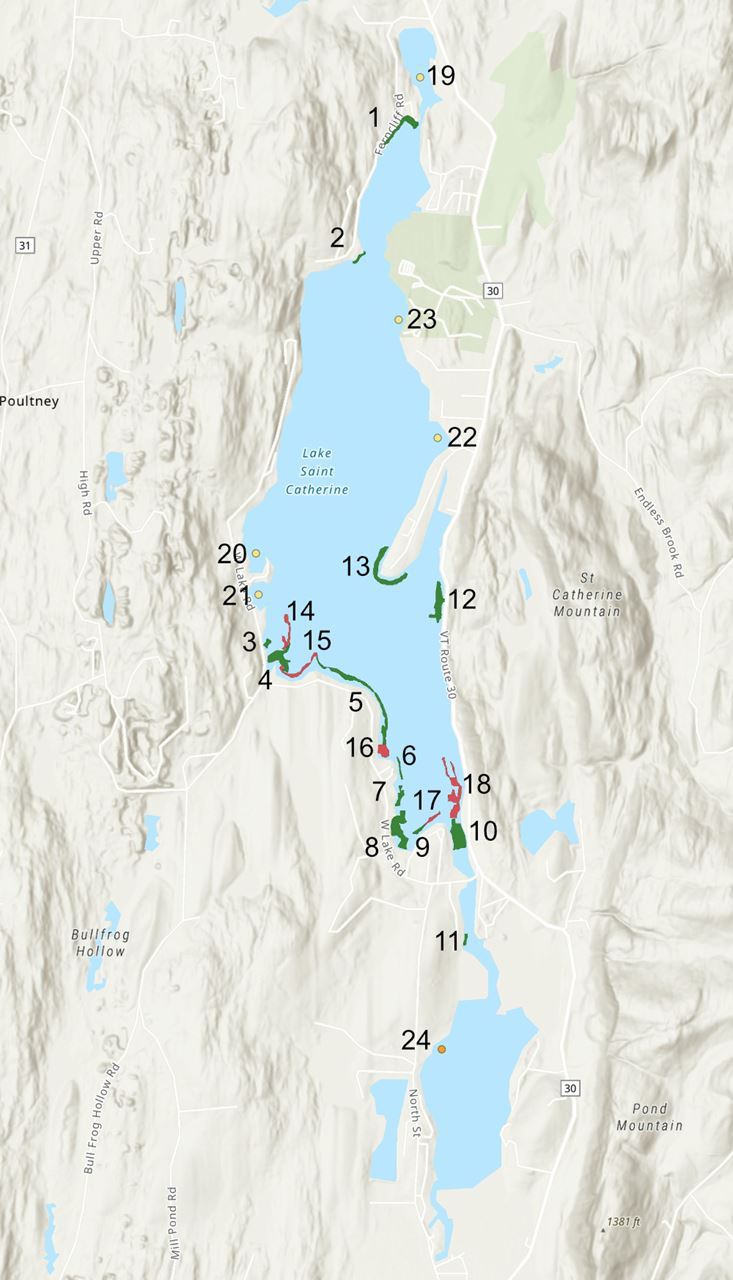
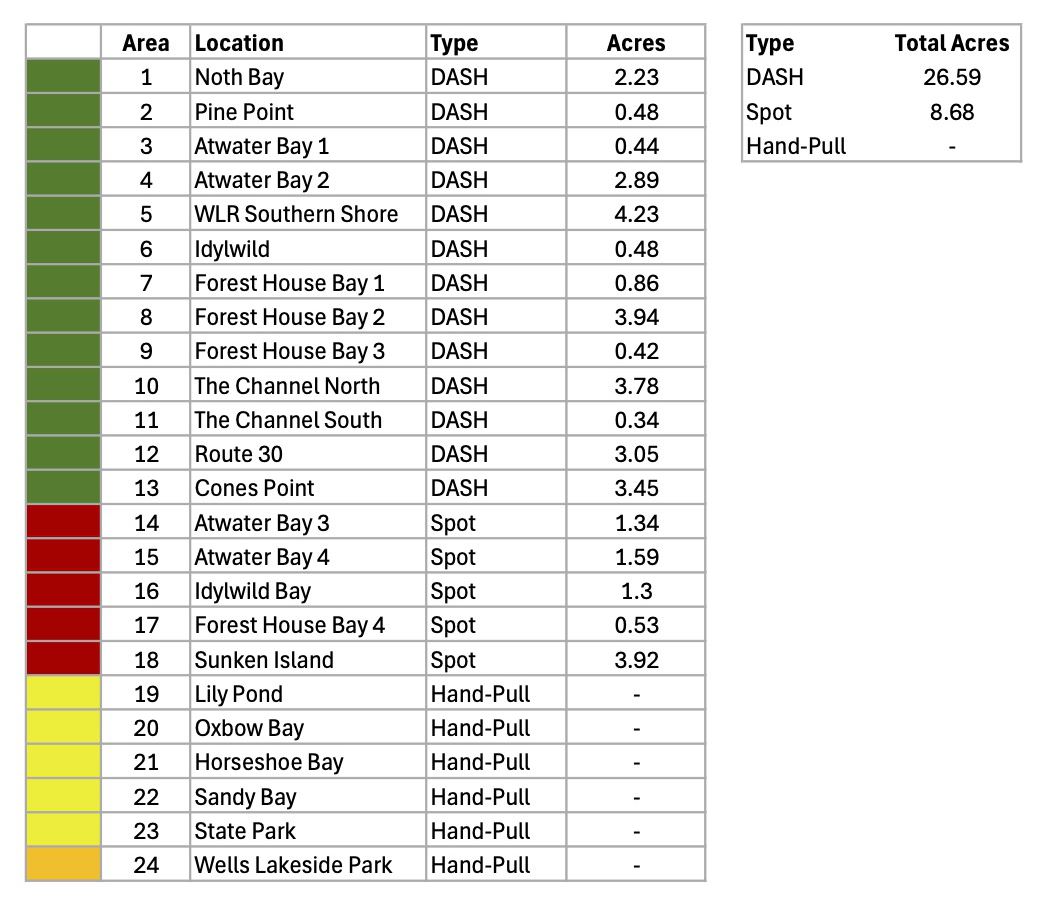
On May 11th, the LSCA, Ready Scout, and Olin Reed from the Vermont Lakes and Ponds Program participated in, and conducted an aquatic plant survey to evaluate native plant and milfoil growth, with a follow up survey scheduled for the week of June 8th by our DASH team. Pending approval by the DEC after the follow up survey, the 2026 Milfoil Control Plan includes 26.59 acres of diver assisted suction harvesting (DASH), 8.68 acres to be spot treated, 5 areas designated for hand-pulling, and an additional volunteer hand-pulling event at Wells Lakeside Park.
Here is the map:
The Plan:
Our DASH team will begin swimming through low density milfoil areas to hand-pull in June when the water temp allows (areas marked in yellow), and will begin full DASH operations on July 1st (areas marked in green).

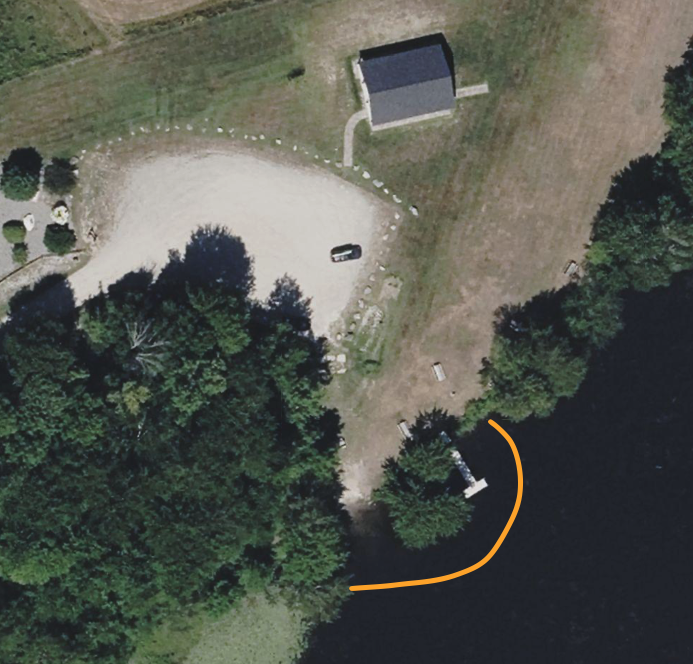
The milfoil hand-pulling and shoreline cleanup volunteer event will take place at Wells Lakeside Park on Little Lake on Saturday, June 20th beginning at 9 AM. Let us know if you’d like to help out and volunteer at this event!
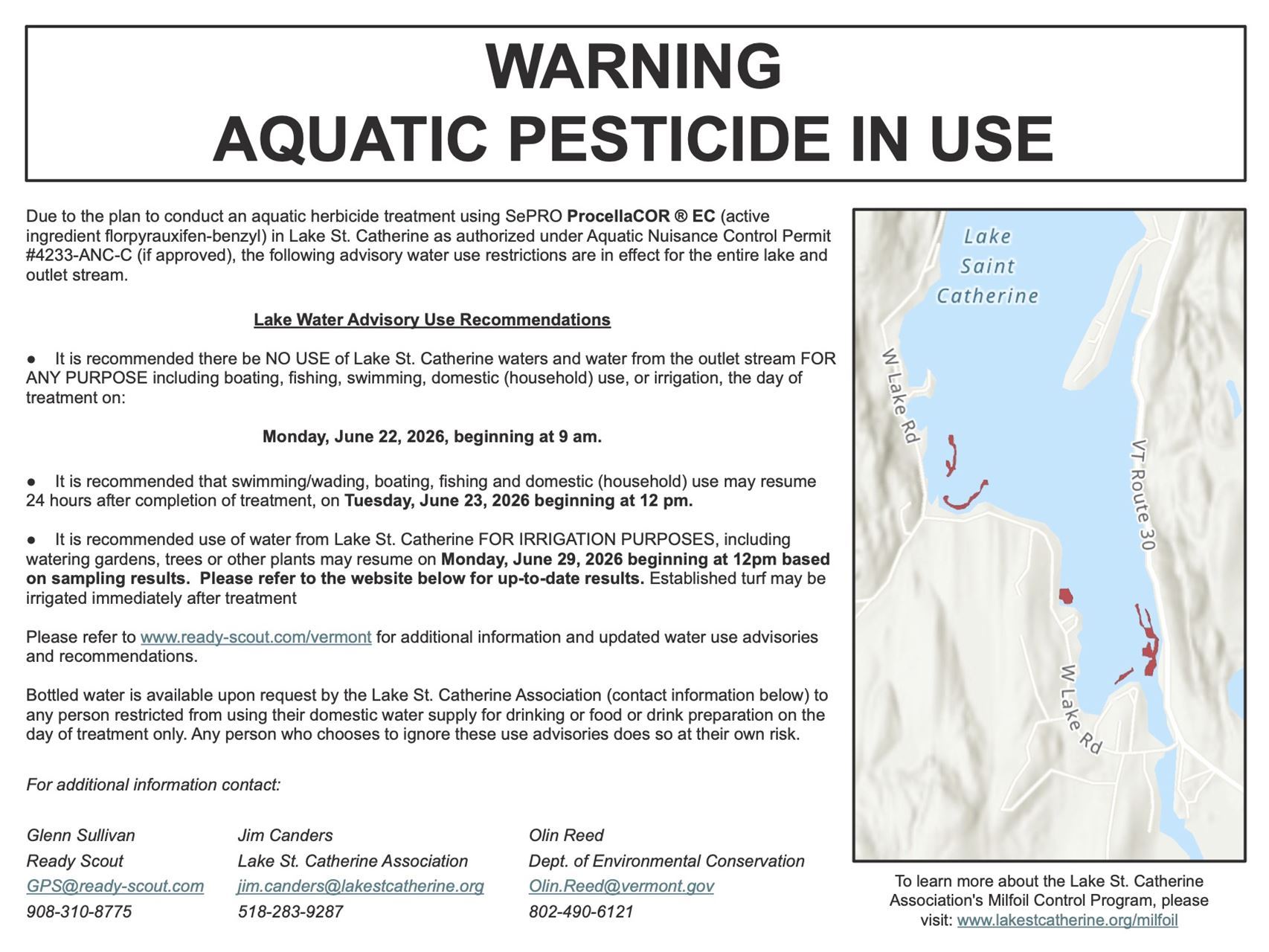
Spot treatments of ProcellaCOR EC will take place on Monday, June 22nd beginning at 9 AM (areas marked in red). Please see the attached notice below for water use *recommendations* (not restrictions):
The LSCA’s Milfoil Control Program consists of five components:
1. 'Stop The Spread' education and outreach. Our 'Stop The Spread' campaign educates boaters and property owners on best practices to limit the spread of milfoil.
2. Volunteer milfoil cleanup. Throughout the season, we encourage lake users, boaters, and volunteers to collect detached floating milfoil and remove it from the lake, including working with property owners to remove detached milfoil, and hand-pulling any along their shoreline.
3. DASH - Diver Assisted Suction Harvesting. Our DASH crew suits up in scuba gear and hand-pulls milfoil by the roots from the lakebed. In sections of lower milfoil density, they will swim the area and hand-pull with mesh bags. In higher density areas, they will set up the DASH equipment which allows them to suction the hand-pulled milfoil up through a tube to a catch table on a boat. Milfoil is then placed in 17.5 gallon buckets for transport off the lake.
4. Herbicide spot treatments with ProcellaCOR EC. In order to maximize our DASH crew's time, effectiveness, and number of acres covered, one of our control methods includes spot treatments with the herbicide ProcellaCOR EC.
5. Water quality improvement programs. Although not directly related to Milfoil Control, the LSCA's work on Lake Wise on LSC, the LSC Stormwater Master Plan, and the LSC Watershed Action Plan all help to limit phosphorus and other nutrients from entering the lake which can contribute to excessive plant growth, and improves overall water quality. You can read more about all these programs on our website: lakestcatherine.org.
These efforts have resulted in the lowest percentage of milfoil cover and frequency of occurrence in the lake since the mid-2000s. Also, and just as importantly, we have seen many species of our native aquatic plants that have been suppressed by milfoil growth have increased in frequency of occurrence, along with an increase in our plant species richness (the number of different plant species present in an ecological community).

These results are exactly what we want to see! LSC has over 30 native aquatic plants which are necessary to sustain a healthy lake ecology. Our efforts are focused on reducing the amount of milfoil in the lake so that these native aquatic plants can grow as they normally would.
What can you do to help?
- As a general rule, get as much milfoil out of the lake as possible and dispose of it.
- Don’t drive through milfoil patches with your boat which will create fragments.
- If you have milfoil on your prop, don’t just reverse and drive away, please remove it from the lake.
- If you have milfoil growing in your dock or swimming area, pull it out by the roots and remove it from the lake.
- If you see milfoil floating anywhere in the lake, near your dock, or along your shoreline, remove it from the lake.
As you may be aware, there has been a lot of misinformation about milfoil, ProcellaCOR, the permitting process, and Lake St. Catherine in general. We encourage everyone to visit our Milfoil Control Program page: https://lakestcatherine.org/milfoil-control-program to read more about milfoil, our milfoil control methods, the permitting process, ProcellaCOR, plant data, results, and a milfoil FAQ.
The LSCA has always employed evidenced-based decision making when evaluating lake related issues, and we continue to do so with our Milfoil Control Program. Working with the State and lake scientists & experts, following the science and the data, and evaluating the results of our efforts show that we are doing the right things for the long-term health of LSC. To our members, and all who love LSC, if you ever have any questions or concerns, reach out to us, we’d be happy to answer them. You can always reach us at info@lakestcatherine.org.
The LSCA's 2026 Milfoil Control Program - and the LSCA's Greeter Program - are funded by grants from the State's Grant-In-Aid Program, an AIS Prevention & Control grant from the Lake Champlain Basin Program and NEIWPCC, and contributions from the lake community through allocations from the towns and LSCA membership dues & donations.
Thank you.