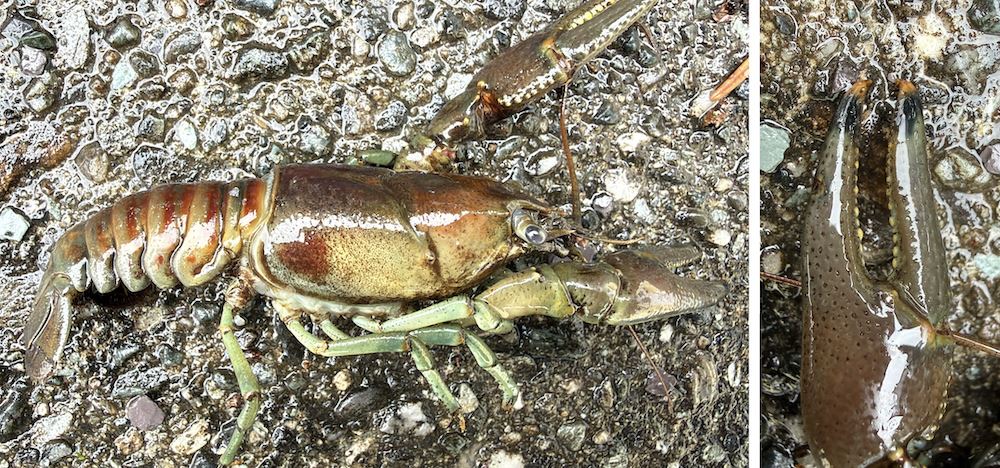
Hello LSC, we have some unfortunate news to report. A Rusty Crayfish (Faxonius rusticus) has been discovered in Lake St. Catherine:
The Rusty Crayfish has not previously been confirmed to be in the lake. You can see the DEC's "List of Vermont waterbodies with a confirmed presence of an aquatic invasive species and species of concern".
This crayfish was found on May 1st by a lake resident. We collected it, photographed it, and sent the photos to the DEC. Based on the crayfish's distinctive markings, including the red spot on its side, and the black coloring on the tips of its claws, the DEC has confirmed it is a Rusty Crayfish. They have asked us to save the specimen, which they will collect to make a formal confirmation. At that time, it will be added to the list of invasives confirmed to be in Lake St. Catherine.
It’s unclear how long this crayfish has been in LSC, but it was most likely introduced via bait bucket transfer.
This crayfish has a HUGE negative impact on a lake’s ecosystem. It is highly destructive of aquatic plants, they outcompete and displace our native crayfish, and they impact fish populations by both consuming the same insects as fish - and raiding their nests to eat their eggs.
Here is a Gemini summary of this destructive invasive:
The introduction of the Rusty Crayfish (Faxonius rusticus) is often described by ecologists as a "biological bulldozer" effect. Native to the Ohio River basin, these crustaceans are more aggressive, have larger appetites, and possess bigger claws than most native species, allowing them to fundamentally reshape lake environments.
Here is a breakdown of the specific impacts on a lake ecosystem:
1. Destruction of Aquatic Vegetation (Macrophytes)
Rusty crayfish are notorious for clear-cutting underwater forests. Unlike native species that eat sparingly, "rusties" often clip the stems of aquatic plants without even consuming the whole thing.
- Loss of Habitat: These plants serve as nurseries for small fish and nesting grounds for invertebrates.
- Water Quality: Without plants to anchor sediment and absorb nutrients, lakes can become more turbid (cloudy) and prone to algae blooms.
2. Displacement of Native Crayfish
Through a combination of "bully" tactics and biological advantages, they quickly outcompete local species.
- Direct Aggression: They are more likely to win fights for prime hiding spots under rocks, leaving native crayfish exposed to predators like bass and walleye.
- Hybridization: In some cases, they mate with native species, effectively "breeding out" the local genetics over several generations.
3. Impact on Fish Populations
The presence of rusty crayfish creates a "double-whammy" for local fish species:
- Competition for Food: They consume the same aquatic insects and snails that young fish rely on.
- Egg Predation: They are highly effective at raiding the nests of fish like smallmouth bass and bluegill, consuming the eggs and significantly reducing the "recruitment" (survival) of new fish.
4. Altered Food Web Dynamics
Because they have thick shells and aggressive temperaments, many predators find them harder to eat than native crayfish.
- Energy Flow: By consuming massive amounts of energy (plants and invertebrates) but being difficult for fish to prey upon, they act as a "sink" where energy gets trapped instead of moving up the food chain.
- Invertebrate Declines: Their high metabolism leads to a drastic reduction in the population of snails, leeches, and mayflies, which are vital components of the ecosystem's biodiversity.
You can read more about the Rusty Crayfish in this article from Northern Woodlands: "Big, Bold and Rusty: Invasive Crayfish has Claws".